
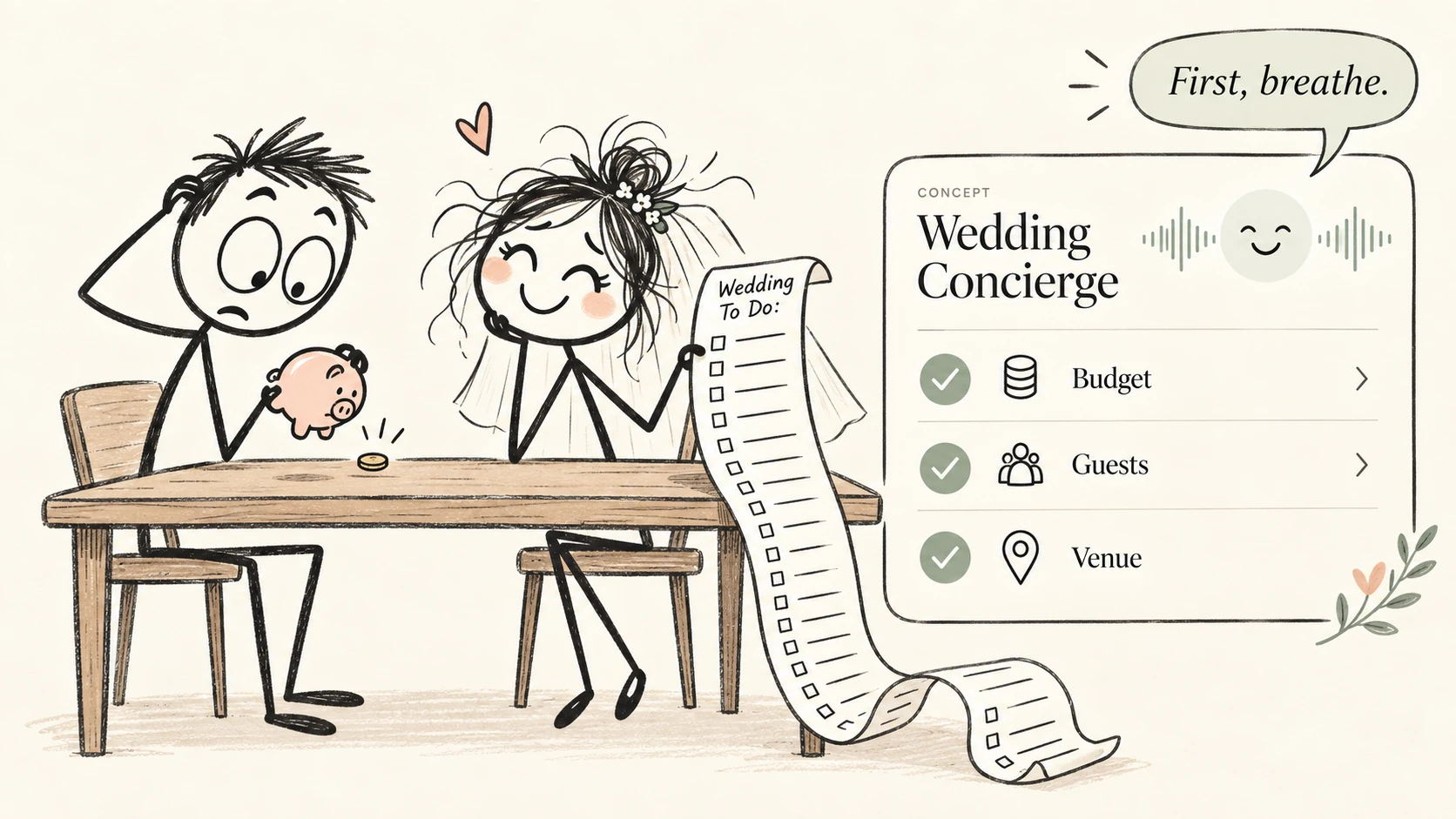
Years later, when AI voice assistants began to emerge, I saw an opportunity to make that process much simpler. In July 2025, through MyRemote.Team, I sent The Knot a proposal for an AI Wedding Concierge.
This is the thinking behind it.
Entering an industry you have to learn as you go
When you work inside an industry, you gradually stop noticing how much you know.
A photographer understands coverage, editing, delivery schedules, and the questions couples should ask before booking. A venue manager knows which arrangements affect catering, access, setup, and guest capacity. A florist knows how season, location, and design choices affect an order.
The couple has to learn enough about all of these fields to make sensible decisions.
Even finding the right question takes knowledge. A venue may look perfect in photographs, but what needs to be rented separately? What happens if it rains? How will guests get there? What does choosing it mean for the remaining budget?
That was the problem I wanted the concierge to address.
An assistant could help people discover what they needed to consider, then organize the answers into a plan that reflected their particular wedding.
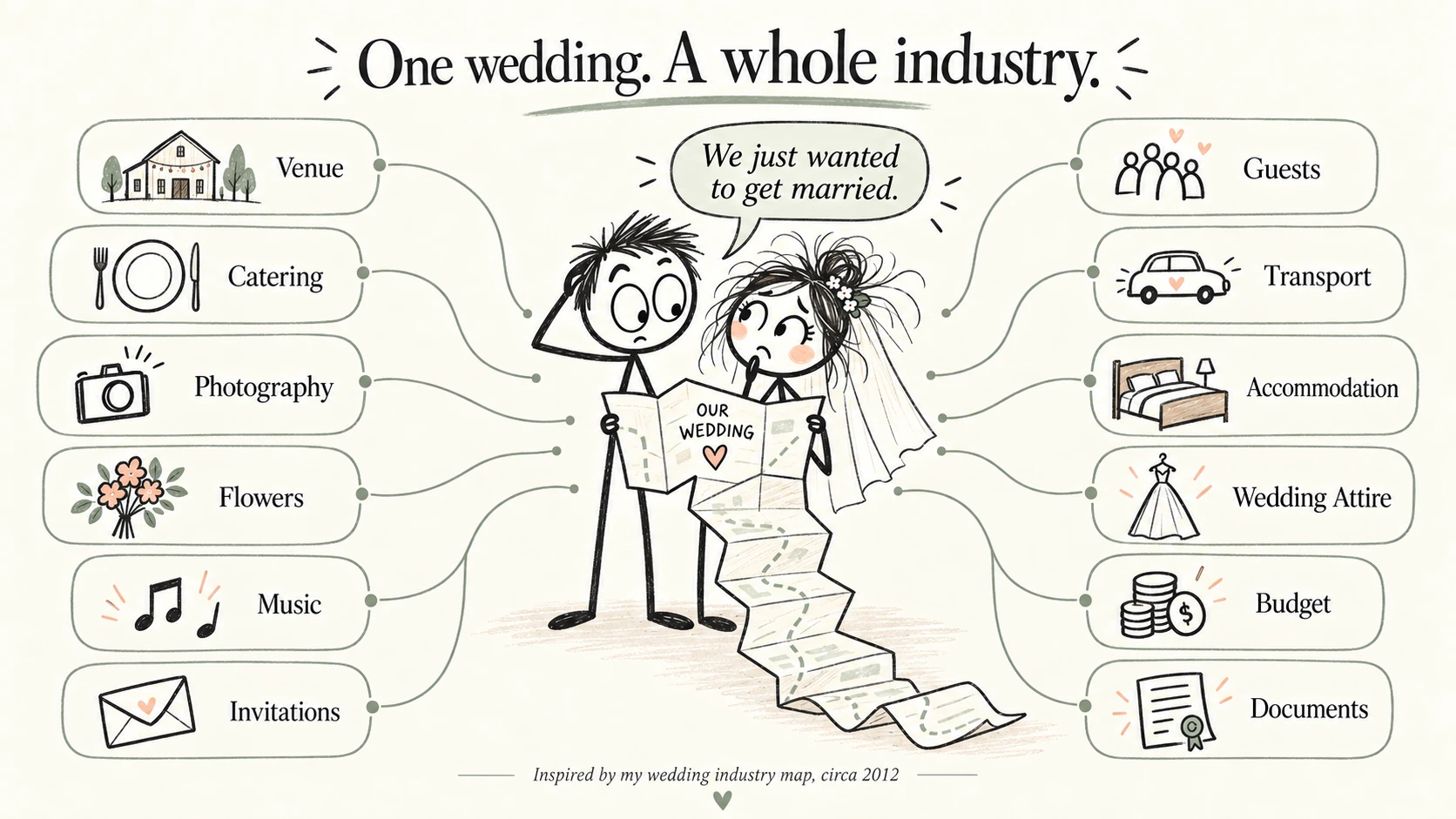
The original map shows how I approached this complexity before building the website network. It is a historical working document, reflecting the planning assumptions and practices of that period.
Download my original wedding planning map (PDF, circa 2012)
The AI should know what to ask
The most important part of my concept was the conversation.
I imagined a couple opening the application and speaking naturally about what they wanted. The assistant would ask about their budget, approximate guest count, location, timing, and priorities. It would help them clarify details they had not yet considered.
A couple might know they wanted a relaxed outdoor wedding but have little idea what that implied operationally. The assistant could guide the discussion toward weather arrangements, accessibility, catering facilities, transportation, and accommodation where relevant.
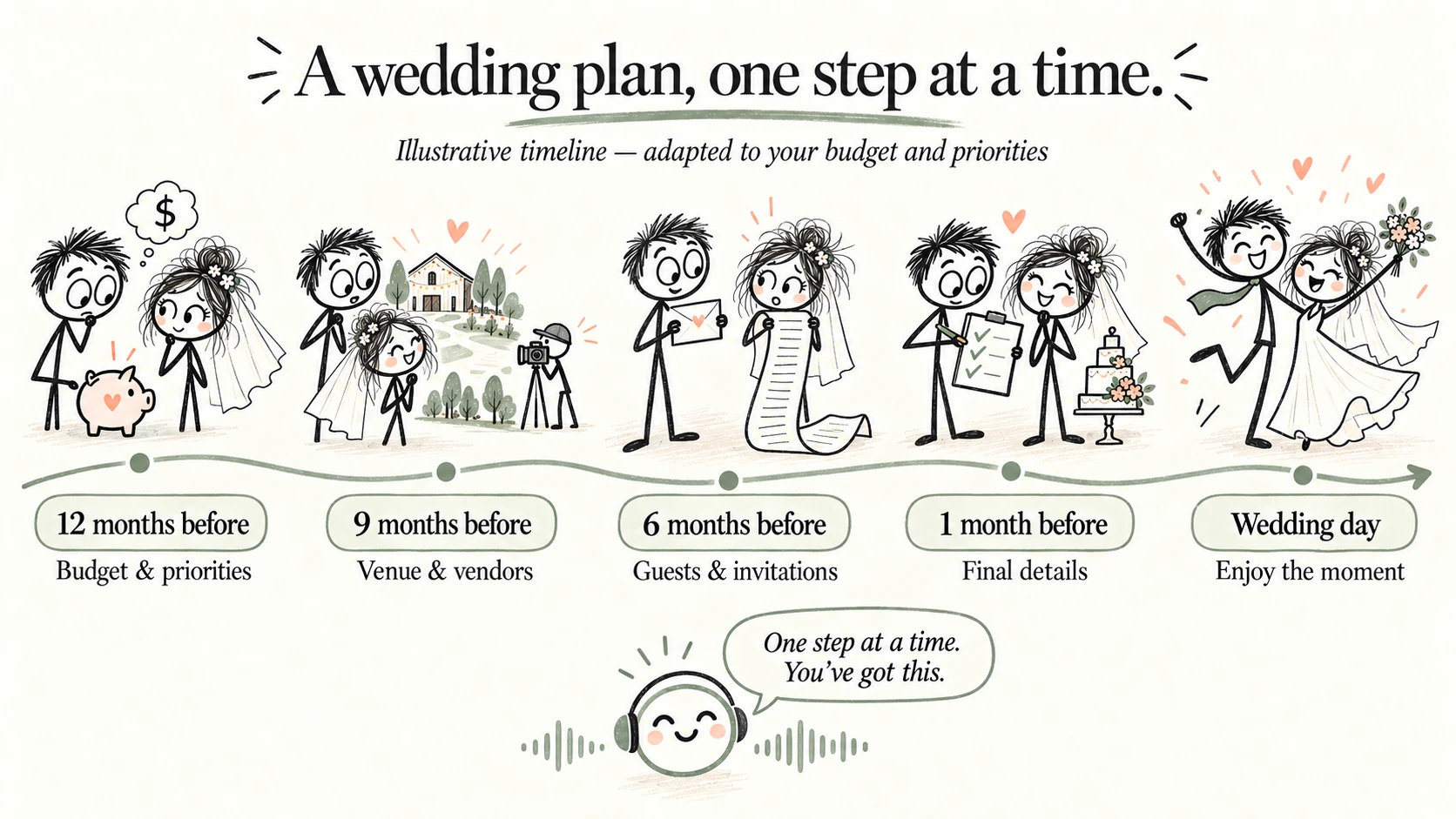
From that conversation, it would build a personalized planning map.
My earlier maps presented the complexity of wedding planning on a single surface. The AI concept would use the couple’s circumstances to decide which parts mattered, what needed attention first, and what could wait.
The product would have to earn trust through that guidance. Asking relevant questions at the right time would be as important as answering them.
A budget that shapes the plan
I wanted the budget to influence the planning process from the beginning.
The assistant would help the couple allocate money around their priorities, then revisit those allocations as decisions became concrete.
If photography mattered particularly to them, the plan should reflect that. If they chose a more expensive venue, they should be able to understand the effect on everything still unbooked.
They could ask:
“Can we afford this option?”
The answer would need to account for existing commitments, remaining expenses, and the choices still open to them.
The same principle would apply to the timeline. Adding guests, changing a location, or moving the date could require several adjustments. A useful concierge would help the couple understand and manage those changes without rebuilding the plan manually.
An ecosystem for couples, guests, and suppliers
The vision extended beyond the couple’s planning conversation.
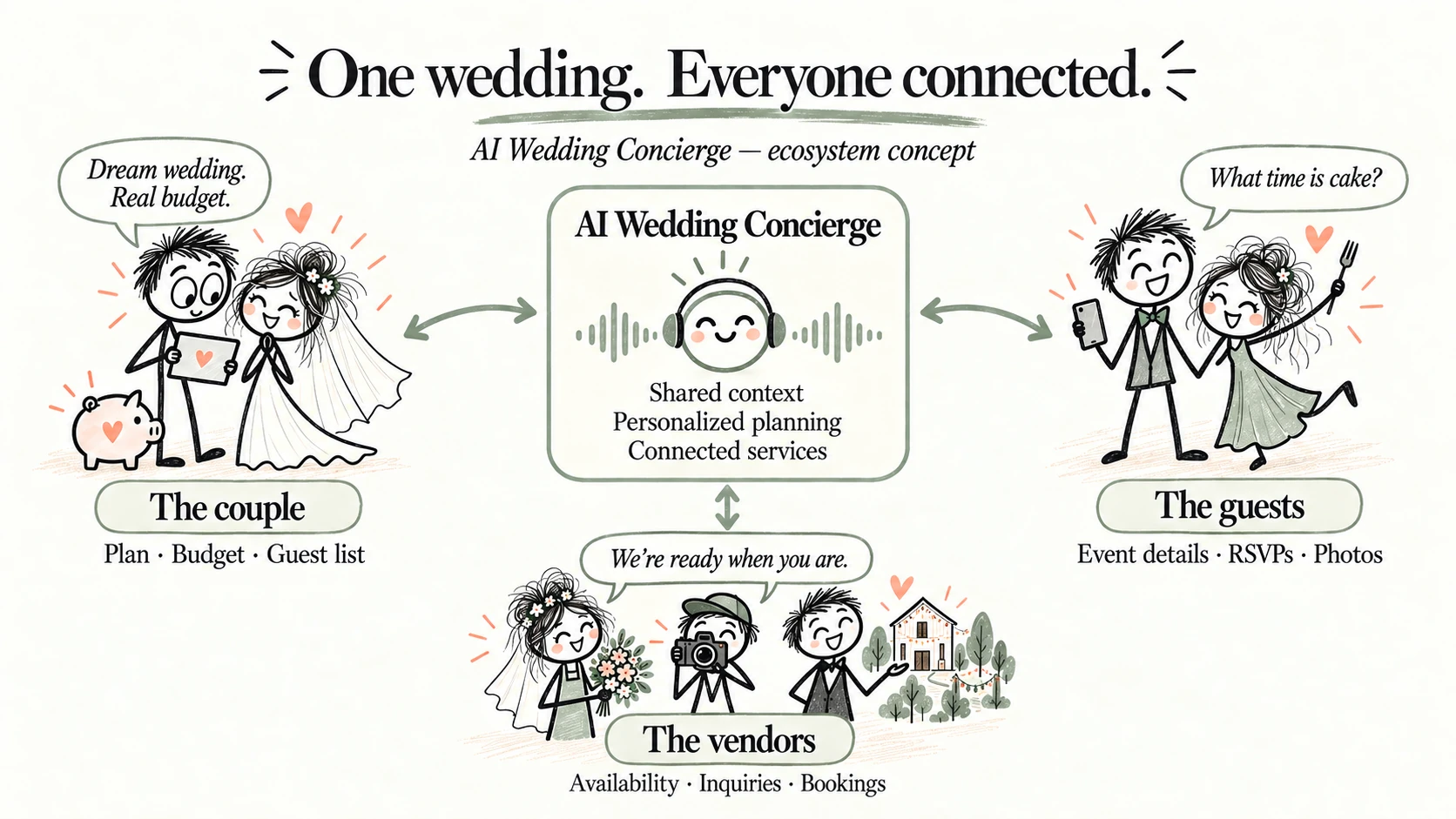
For the couple, the application would bring together their plan, budget, suppliers, guest list, and shared wedding information. They could add guests through the assistant and use features such as photo albums within the same experience.
Guests would also be able to speak with the application. They could ask practical questions about the event and receive information relevant to them, reducing the number of messages the couple had to handle individually.
Suppliers would have their own connected tools. I imagined dashboards or mobile interfaces through which venues, florists, photographers, and other businesses could manage the opportunities coming from the platform.
The connection between these participants was central to the idea.
A couple’s conversation could lead to a suitable supplier recommendation. That recommendation could become an inquiry or booking. The resulting decision could then update the wedding plan and the information available to guests.
Making that work would require reliable integrations, accurate supplier information, and clear confirmation before commitments were made. The value would come from carrying useful context through the process.
Why I approached The Knot
I knew The Knot from my earlier years in the wedding industry, although I had no existing relationship with the company.
I saw it as an established player with the audience, supplier relationships, and potential resources to support a project of this scope. Its own reporting in early 2025 described reaching a majority of engaged couples in the United States. The Knot’s 2025 announcement provides that context.
Those existing relationships mattered. Building an assistant and building the market around it are substantial undertakings. A company already connecting couples with wedding professionals had a foundation on which to develop the experience.
The Knot also already had supplier tools through WeddingPro, as described in its July 2025 product announcement. The opportunity would therefore involve connecting and extending existing infrastructure.
My commercial intention was straightforward. I wanted to deliver the complete solution through MyRemote.Team, assemble the people needed to build it, and earn revenue from that work.
I did not want to finance a new wedding platform myself. I preferred to bring the concept and delivery capability to a business already established in the market.
In the ecosystem I envisioned, suppliers would gain business and The Knot could potentially earn a commission on transactions facilitated through the platform. That was a proposed revenue opportunity, subject to the company’s strategy and operating model.
What happened after the proposal
I sent the presentation in July 2025 and received no reply. I do not know whether it was reviewed.
The original deck sets out the proposed features, implementation approach, and business opportunities. Its projections were proposal-stage hypotheses, not measured results.
Download my AI Wedding Concierge proposal sent to The Knot in July 2025 (PDF)
The market has since produced related developments.
On September 25, 2025, The Knot announced “Make it Yours,” an AI feature that recommends vendors based on couples’ saved inspiration images, style, and location. On February 3, 2026, it announced an application within ChatGPT for personalized vendor discovery and recommendations.
My proposal preceded those public announcements. I have no information about when their development began, and no basis for connecting their launches to my presentation.
What interests me is the product direction: using conversational AI and contextual recommendations to help people navigate wedding planning.
The concierge I envisioned brought a broader set of activities into that conversation, including budgeting, planning, guest interaction, and supplier coordination.
The opportunity I still see
The wedding maps I made around 2012 captured how much there was to organize.
The opportunity I saw in 2025 was to make that knowledge useful at the moment a couple needed it. An assistant could guide them through unfamiliar decisions, ask questions they would not have known to ask, and maintain a plan as their choices evolved.
That remains the part of the idea I find most compelling.
A couple should be able to explain what they want, what they can spend, and what matters to them. The system should help turn that conversation into an understandable sequence of decisions and actions.
That was the experience I wanted to build: a way for people to plan their wedding without first having to learn how the entire wedding industry works.
Leave a Reply